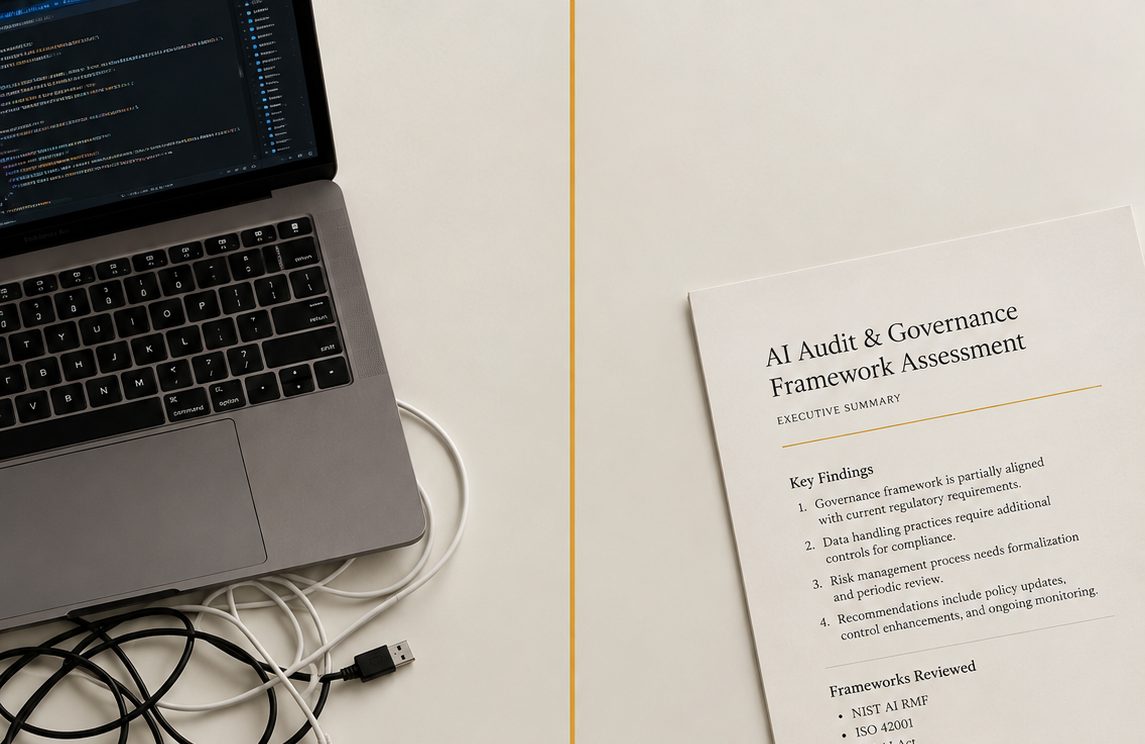
An audit of your own work is not an audit. The word only means something when the person checking has nothing invested in the answer.
There is a version of AI assurance where the company that built your model also certifies it. It is faster, it is cheaper, and it is worth almost nothing, because the people checking have an interest in what they find.
iDharma audits AI systems it did not build. That constraint costs us work we could otherwise take, and it is the only reason the output means anything.
The second constraint is that findings map to named, published standards rather than a checklist of our own invention. A proprietary framework is unfalsifiable by design: nobody outside can tell whether you applied it consistently. A named standard can be argued with, which is the point.
The third is that we show our working. A report that says "compliant" without the evidence is an opinion in a nice font. A regulator, a board, or a customer should be able to follow how we got there and disagree with us in specific places.
None of these make the work easier. They make the result checkable, which is the only quality an audit really has.